Complete Analysis of Cam Rotor Pumps
In the field of fluid transfer in modern industry, traditional centrifugal pumps often struggle when handling complex media such as high-viscosity fluids, particle-laden fluids, and even gas-liquid mixtures, while screw pumps frequently suffer from high maintenance costs. As a positive displacement pump, the cam rotor pump has been widely adopted across various industries to address pain points in fluid transfer. With its unique advantages, it has become the preferred choice for an increasing number of enterprises.
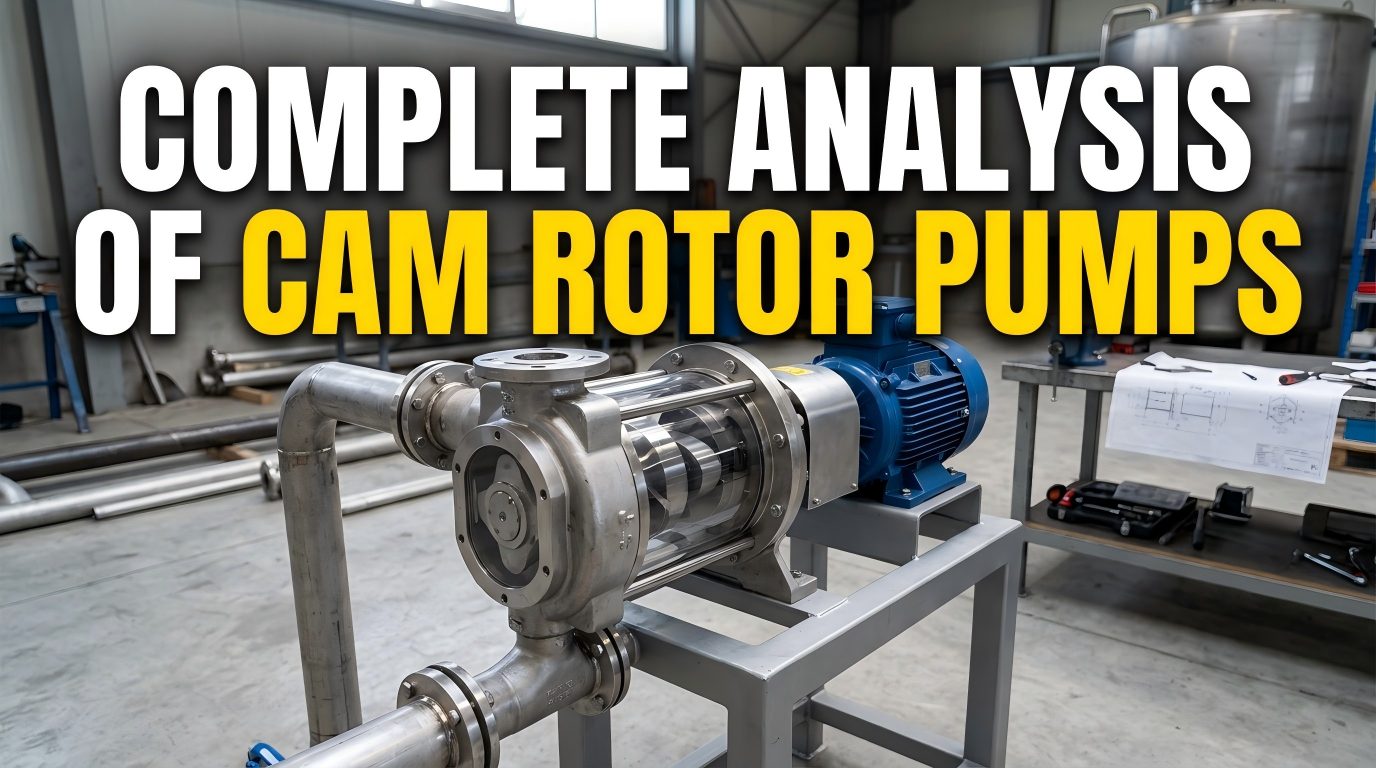
What is a Cam Rotor Pump?
A cam rotor pump is essentially a rotary positive displacement pump. Its core consists of a pair of counter-rotating rotors inside the pump chamber, driven by a synchronous gearbox. During operation, a small clearance is maintained between the rotors and between the rotors and the pump body, with no contact or friction. This design delivers a vertical self-priming capability of over 8.5 meters, enabling efficient three-phase (solid, liquid, gas) mixing and transfer.
Core Advantages
Compared with conventional pump types, cam rotor pumps balance economy and practicality, with outstanding core advantages:
- Strong self-priming capability: Self-priming height reaches 3–8 meters. No priming is required, easily solving low-level media transfer and improving operating efficiency.
- Compatible with complex media: Low-shear design allows transfer of high-viscosity media (up to 500,000 cP) and particle-laden fluids without clogging, suitable for diverse demanding conditions.
- Stable delivery: Flow rate is unaffected by pressure fluctuations, with a deviation ≤5%, ensuring production precision for applications requiring high flow stability.
- Easy maintenance & energy saving: Simple structure with few wearing parts; maintenance can be performed without removing pipelines. Non-contact rotor operation extends service life, and energy consumption is 15%–25% lower than that of centrifugal pumps.
- High flexibility: Supports bidirectional flow and flow adjustment, operates within a temperature range of -50°C to 350°C, and meets diverse requirements including explosion-proof and hygienic-grade applications.
Cam Rotor Pump vs. Other Pump Types
| Pump Type | Key Features | Suitable Applications |
|---|---|---|
| Cam Rotor Pump | Strong self-priming, gas-liquid mixing, low shear, anti-clogging | Bottom oil in oilfields, particle-laden wastewater, high-viscosity food slurries |
| Centrifugal Pump | Large flow, simple structure, low cost | Clean water and low-viscosity, particle-free clean fluids |
| Screw Pump | Extremely high pressure, ultra-stable flow | Ultra-high-viscosity media and high-pressure transfer applications |
Selection Tips
You do not need to pursue high-end models; focus on three key points:
Select the appropriate model based on media viscosity, solid content, and corrosiveness.
Match equipment parameters to transfer pressure, flow rate, and temperature requirements.
Comply with industry standards to ensure regulatory compliance.
Conclusion
Cam rotor pumps overcome the drawbacks of traditional pumps and provide efficient fluid transfer solutions for multiple industries.
As a leading enterprise in the industrial pump market, Omron Tech Pumps specializes in the R&D and manufacturing of API centrifugal pumps and various screw pumps. Our products are widely used in key fields such as petrochemicals, electric power energy, and offshore engineering.
Welcome to visit our official website: www.Omron Tech Pumps.com